
What to Do When Your Controller Leaves
Lock down who can move money first, protect the next close, then decide how to fill the role.
The short answer
When your controller leaves, lock down who can move money first. Then protect the next month-end close, document what only that person knew, and decide how to fill the role. We take this work over for multi-site companies under one named senior owner, but the first steps below apply to whoever fills the gap.
Key points
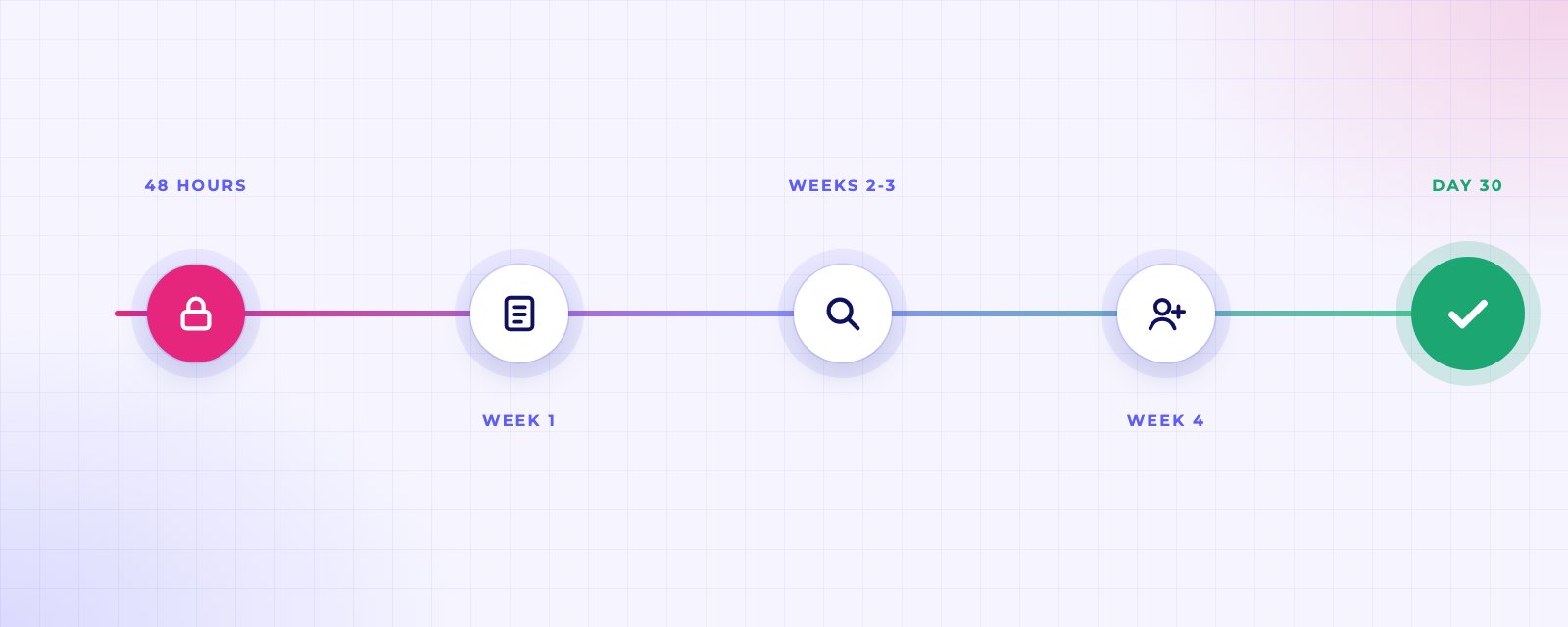
- Secure bank access, approvals and system logins in the first 48 hours.
- Keep the close on its normal calendar, even if the reports are simpler that month.
- Choose between a new hire, an interim and an outsourced team by week four.
In this article
- What should you do in the first 48 hours?
- What should you do in the first week?
- How do you keep the month-end close on track?
- What should you review by weeks two and three?
- Should you hire a new controller or outsource the role?
- How do you hand over to whoever fills the role?
- Controller transition FAQ
What should you do in the first 48 hours?
Start with access, because money can still move while nobody is watching it. Your controller likely held bank logins, payment approvals and admin rights that no one else tracks.
- Remove or transfer access to banks, payment tools, payroll and the accounting system.
- Name a temporary approver for every payment that was going through your controller.
- Check payments already scheduled for the next two weeks.
- Tell your banks, your payroll provider and your outside accountant who the new contact is.
- Secure the shared inboxes vendors use, such as an AP address, so invoices keep arriving.
If your company runs across several locations, repeat this for each entity. Access tends to differ by location, and those are the logins most often missed.
What should you do in the first week?
In week one, find out what is due and what only your controller knew. A departing controller’s knowledge rarely lives in one document, so build the list yourself.
List every recurring deadline: payroll runs, sales tax, loan covenants, lender reports and board packs. Then pull the month-end checklist if one exists, and the latest reconciliations for each bank account and entity.
If your controller is still reachable, book one working session to walk through open items. Ask about unusual accruals, vendor disputes and anything handled by hand.

How do you keep the month-end close on track?
Keep the close on its normal calendar, and accept a simpler output for one month. A late close leaves leadership making decisions blind, and it makes the following month harder.
Name one person who owns the close. Focus first on bank reconciliations, AP and AR, and payroll entries. Those are the numbers that tell you whether cash and the books agree.
Hold back the extras if you need to. A smaller report that is accurate and on time beats a full package that arrives weeks late. If an investor or lender expects a set format, tell them early what will change that month.
What should you review by weeks two and three?
Use weeks two and three to check what the transition has exposed. A controller’s exit often shows where the finance function depended on one person.
Look for three things:
- Controls. Who approved what, and could one person both create and pay a bill?
- Documentation. Could someone new run the close from what is written down?
- Systems. Are locations coded the same way, or does each one work differently?
Write down what you find. That list becomes the brief for whoever takes over.
Should you hire a new controller or outsource the role?
Decide by week four, based on what the job really involves now. A company with one entity may only need a replacement. A multi-site company may need a whole function around that person.
| Option | Best when | Watch out for |
|---|---|---|
| New in-house controller | You want someone on site and have a strong team underneath | Recruiting time, and the same gap if they leave |
| Interim controller | You need cover while you decide | It keeps the close running but rarely fixes the setup |
| Finance as a Service | You run several entities or locations and need AP, close and reporting covered | You need a partner who owns the numbers, not one who only processes them |
The exit can also be a good moment to rethink the setup. Omnifi’s Finance as a Service model means one team builds, runs, and modernizes your finance function for one predictable monthly fee.

How do you hand over to whoever fills the role?
Hand over with a written brief, not a single meeting. Whoever steps in, whether a new hire, an interim or an outside team, starts faster when the first month’s work is already on paper.
Put five things in that brief: the recurring deadlines from week one, what your review of controls, documentation and systems found, a map of who can approve and pay, the open items from the last close, and the contacts at your banks, payroll provider and outside accountant.
Then agree how the first close will run. Decide who prepares the reconciliations, who reviews them and when leadership sees the numbers. A shared calendar for the first two closes removes most of the guesswork on both sides. Finally, set a check-in at the end of the first month. Compare what was handed over with what the new owner actually needed, and fill the gaps while the old setup is still fresh in everyone’s mind.
How we handle this at Omnifi
A named senior owner leads the takeover from the first call. We map your processes, systems and entities, secure approvals, and keep the close running while the new setup goes in. Anything that moves money gets human sign-off. See how this works in our finance services, or read how we work with PE-backed companies.
Controller transition FAQ
What is the first thing to do when a controller quits?
Lock down who can move money. Remove or transfer the controller’s access to banks, payment tools, payroll and the accounting system, then name a temporary approver for every payment. Check what is already scheduled to go out, and repeat these steps for each entity or location.
How long does it take to replace a controller?
It depends on the market and your location, and recruiting often runs past the next close or two. That is why you should separate two decisions: who keeps the close running now, and who fills the role for the long term.
Can you outsource a controller?
Yes. An outsourced team can cover controller oversight along with the close, consolidation and AP. Omnifi includes controller oversight in the scope of Run, led by a named senior owner, for US companies with $5M to $75M in revenue across multiple entities or locations.
Who should approve payments while the controller role is empty?
Pick one senior person who already knows the business, often the CFO, CEO or a finance director, and make them the temporary approver for every payment. Keep a second person on large or unusual payments, so no one can both create and pay a bill. Write the rule down and share it with your bank and AP team.